
Last updated on March 27th, 2026 at 01:57 pm
Why Industrial Moisture Removal Matters for Manufacturing Success
Drying equipment manufacturers provide essential machinery that removes moisture from materials across nearly every industrial sector. From food and chemicals to pharmaceuticals and environmental waste, the right drying solution is critical to product quality, operational efficiency, and profitability.
Industrial dryers solve a fundamental challenge: excess moisture causes quality issues, adds shipping weight, enables microbial growth, and reduces shelf life. The right equipment transforms wet materials into stable, consistent products, reducing operational costs and waste.
The history of industrial drying stretches from ancient food preservation methods like sun-drying to the mechanical revolution of the 18th century. Innovation accelerated during World War II when scientists found that freeze-dried blood remained viable without refrigeration, revolutionizing medical support.
Today’s drying equipment manufacturers offer sophisticated systems combining precise temperature control, optimized airflow, and automated operation. These systems handle everything from delicate pharmaceutical compounds to high-volume food products.
Selecting the right manufacturer means evaluating their experience with your material, range of technologies, customization capabilities, and long-term support. The best partners provide pilot testing, comprehensive engineering, and reliable aftermarket service.

How Industrial Dryers Work: The Science of Moisture Removal
Industrial drying is more than just making materials “less wet.” Drying equipment manufacturers engineer systems for precise moisture control to preserve quality, ensure stability, and prepare materials for packaging, processing, or storage. The science relies on heat transfer and phase change principles to achieve specific drying goals.

Two primary methods drive moisture removal: evaporation and sublimation.
Evaporation is the most common method, converting liquid moisture into vapor by applying heat. The vapor then moves away from the material. Industrial systems apply this principle with precision and control.
Sublimation, used in freeze-drying (lyophilization), is for heat-sensitive materials. It involves freezing the moisture in a material and then applying a vacuum. This causes the ice to transform directly into vapor, preserving the material’s original structure. It is ideal for pharmaceuticals, extracts, and premium foods.
Three heat transfer mechanisms power these methods:
Conduction (indirect heating) transfers heat through direct contact with a hot surface, like in a drum or paddle dryer. This method is excellent for pastes, slurries, and materials that should not be exposed to hot gases.
Convection (direct heating) uses heated air or gas to warm materials and carry away moisture. Most common industrial dryers, including spray, fluid bed, and rotary dryers, rely on this efficient method.
Radiation (infrared) delivers heat via electromagnetic waves. It works well for surface drying and on materials that readily absorb infrared energy.
The choice between direct and indirect drying is critical. Direct systems bring the heating medium (like hot air) into contact with the product for rapid drying. Indirect systems use a barrier (like a heated wall) to transfer heat, protecting sensitive materials from contamination and direct exposure to the heat source.
Choosing the right combination of drying method and heat transfer mechanism is key to efficiency and product quality.
A Guide to Industrial Dryer Types and Technologies
Each type of industrial dryer is designed for specific challenges, and matching your material to the right technology is key. Industrial dryers increase productivity, ensure consistent product quality, and deliver cost savings through energy efficiency and reduced waste. For more options, visit More Dryers Information for additional resources.

Conduction Dryers (Indirect Heating)
Conduction dryers are ideal for sticky, pasty, or viscous materials that should not contact hot gases. They transfer heat through a heated surface.
Drum dryers apply a thin film of liquid, slurry, or paste onto one or two heated rotating drums. The material dries rapidly and is scraped off as a flake or powder. We offer Atmospheric Double Drum Dryers and Atmospheric Single Drum Dryers.
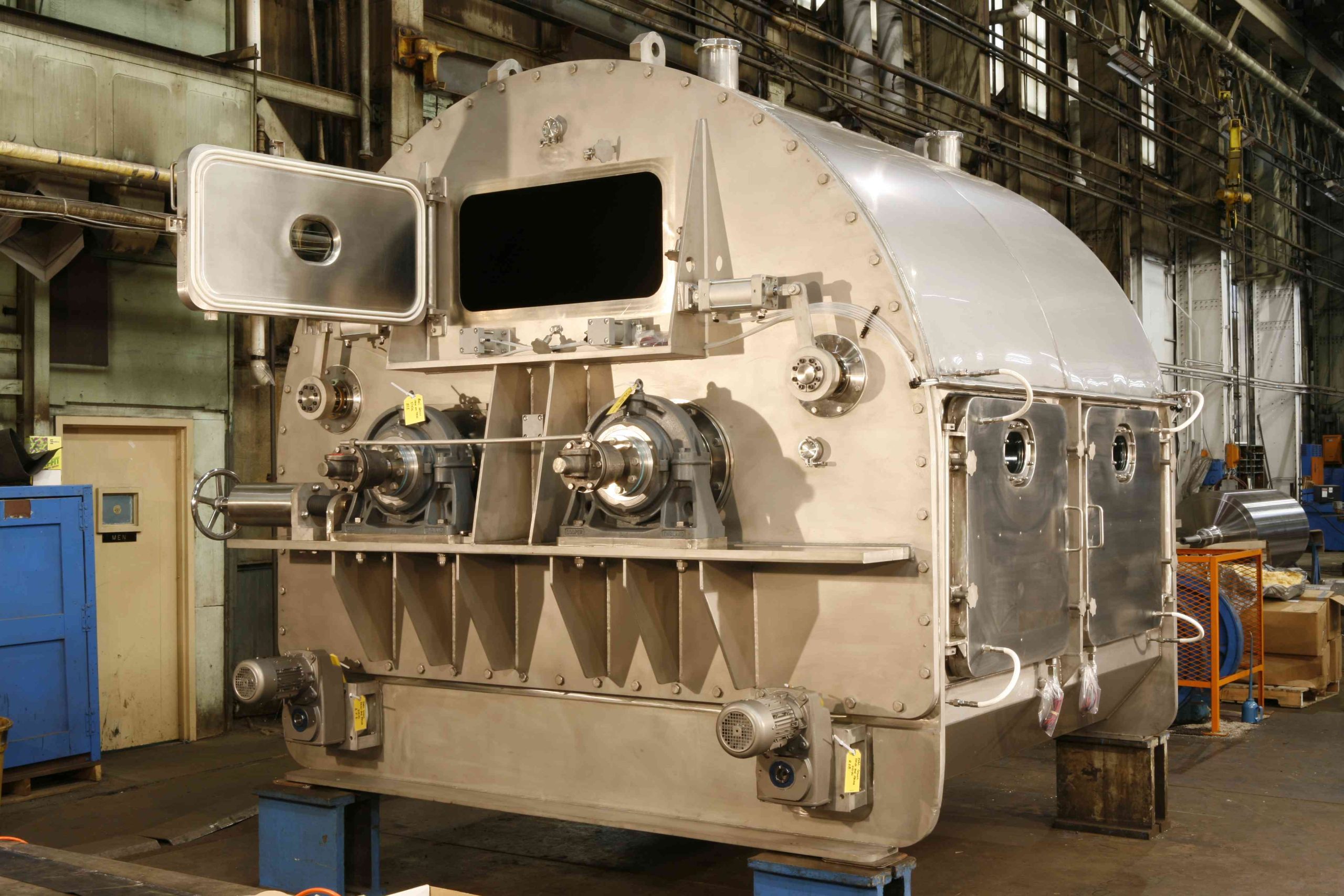
Paddle dryers use rotating, heated paddles in a trough to mix and convey material, ensuring even drying for slurries and filter cakes. Our Vacuum Rotary Paddle Dryers operate under reduced pressure for heat-sensitive products.
Screw conveyor dryers use heated screws in a jacketed trough to dry material while offering precise control over residence time, making them effective for granular solids.
Our Cooling Drum Flakers use a similar principle, employing a cooled drum to solidify molten materials into flakes.
Convection Dryers (Direct Heating)
These versatile systems bring hot gas into direct contact with material for rapid, efficient drying.
Spray dryers transform liquid feeds into dry powder in seconds by atomizing the liquid into droplets within a hot air chamber, creating a uniform, free-flowing powder.
Fluid bed dryers suspend solid particles in an upward flow of hot gas, creating a fluidized state for exceptional heat transfer. This method is ideal for granular materials.
Flash dryers introduce moist powders into a high-velocity stream of hot gas, evaporating surface moisture in milliseconds with minimal thermal degradation.
Rotary dryers are workhorses for bulk solids like minerals and aggregates. A large rotating cylinder tumbles material through a stream of hot gas for high-volume drying.
Conveyor and belt dryers move material on a belt through multiple heating zones, allowing for custom drying profiles ideal for food products and industrial components.
Our expertise also includes Evaporation, Distillation & Separation processes, providing complete solutions.
Vacuum and Freeze Dryers for Sensitive Materials
For materials that cannot tolerate high temperatures, vacuum and freeze-drying technologies are essential.
Vacuum dryers lower the boiling point of water by reducing chamber pressure, allowing evaporation at low temperatures. This protects sensitive compounds from thermal degradation. Our Vacuum Shelf Dryers provide gentle, uniform drying, while our Vacuum Pan Dryers handle slurries and pastes that require agitation.
Freeze dryers (lyophilizers) are the gentlest method. They freeze the material and use a vacuum to cause sublimation (ice turns directly to vapor). This preserves the material’s structure, making it indispensable for vaccines, enzymes, and premium foods.
Key Industries and Applications for Drying Equipment
Drying technology is a critical process across a vast range of sectors. Removing moisture improves product quality, extends shelf life, and reduces costs. Our Industries page showcases the breadth of applications we support.
Food & Beverage Processing
The food industry relies on drying to create products like powdered milk, instant coffee, and dehydrated fruits and vegetables. It is also essential for producing ingredients such as starches and proteins used in countless processed foods. Drying transforms materials into stable powders, reducing shipping weight and extending shelf life. Learn more on our Food & Beverage page.
Chemical Manufacturing
This industry requires robust drying systems that handle corrosive materials, recover solvents, and meet precise moisture specifications. Our equipment is used to produce resins, pigments, polymers, catalysts, and inorganic salts, where final quality depends on effective moisture removal. We also provide solutions for specialty chemicals and disperse dyes, as detailed on our Chemical page.
Pharmaceutical & Nutraceutical Production
In this sector, product integrity is paramount for patient safety and regulatory compliance. Active Pharmaceutical Ingredients (APIs) and excipients often require gentle vacuum drying to remove solvents without degrading compounds. For heat-sensitive herbal extracts and vitamins, low-temperature methods like freeze-drying are invaluable for preserving their beneficial properties. We have specialized expertise in Pharmaceutical and Nutraceutical applications.
Environmental and Waste Management
Drying technology offers impactful environmental solutions. It transforms wastewater sludge and industrial biosolids by reducing their volume by up to 90%, which dramatically cuts disposal costs and can create valuable soil amendments. Drying also allows for the recovery of solids from filter cakes and industrial slurries, turning waste streams into resources. Our Environmental solutions promote both industrial efficiency and sustainability.
How to Choose the Right Partner Among Drying Equipment Manufacturers
Choosing an industrial dryer is a significant investment. The goal is to find a partner among drying equipment manufacturers who understands your challenges and can deliver a solution with the best total cost of ownership, not just the lowest upfront price.
Critical Factors for Selecting an Industrial Dryer
- Material Characteristics: A thorough understanding of your material’s properties—moisture content, particle size, heat sensitivity, stickiness, and corrosiveness is the first step to selecting the right dryer.
- Capacity and Throughput: Your required processing volume (e.g., pounds per hour) and operational schedule (24/7 continuous vs. periodic batch) will determine the dryer’s size and design.
- Energy Efficiency: An energy-efficient design with features like heat recovery minimizes long-term operational costs, often providing a rapid return on the initial investment.
- Facility Footprint: The dryer must fit within your available space, including height and integration with existing equipment.
- Batch vs. Continuous Operation: Batch systems offer flexibility for multiple products, while continuous systems provide higher throughput and lower labor costs for consistent feed materials.
Essential Design and Component Considerations
- Materials of Construction: The right material, from high-grade stainless steel for sanitary applications to Hastelloy® for corrosive chemicals, ensures longevity and prevents contamination.
- Automation and PLC Controls: Modern control systems provide precise management of drying parameters, ensuring consistent product quality, data logging for compliance, and operational ease.
- Integration with Other Equipment: A well-designed dryer works seamlessly with upstream equipment like Industrial Mixers and downstream packaging lines to prevent bottlenecks.
- Heat Source: The choice of steam, natural gas, electricity, or thermal fluid depends on availability, utility rates, and sustainability goals.
Navigating Safety and Compliance Standards
Experienced drying equipment manufacturers build safety and compliance into every design.
- Occupational Safety (OSHA): Proper guarding, emergency stops, and safe access points are essential for protecting personnel.
- Environmental Regulations (EPA): Systems must comply with emissions and solvent recovery rules, which can also generate cost savings.
- FDA & cGMP: For food and pharmaceutical applications, equipment must meet sanitary design standards, including clean-in-place (CIP) capabilities and validation support.
- ATEX: For explosive atmospheres (e.g., combustible dusts or solvents), ATEX-compliant designs with explosion-proof components are required for safety.
- CE Marking: This certification is mandatory for equipment operating in or exporting to the European Union, ensuring it meets health, safety, and environmental standards.
Maximizing Performance: Maintenance and Future Trends
Maximizing your dryer’s performance requires ongoing care. Our Aftermarket services are designed to support your equipment’s entire lifecycle, ensuring long-term reliability and process optimization.
Ensuring Longevity Through Maintenance and Support
A solid preventive maintenance program is key to decades of reliable operation. This includes:
- Preventive Maintenance Schedules: Regular inspections prevent unexpected breakdowns and costly downtime.
- Routine Cleaning and Inspection: Fundamental for identifying material buildup, worn seals, or corrosion before they degrade performance.
- Calibration of Sensors and Controls: Ensures accuracy of temperature, pressure, and flow sensors to maintain product quality and energy efficiency.
- Spare Parts: Access to a comprehensive inventory of genuine parts minimizes downtime.
- Field Service: Our expert technicians provide support for commissioning, troubleshooting, and process optimization.
Emerging Innovations from Leading Drying Equipment Manufacturers
The future of industrial drying is smarter, more sustainable, and more efficient.
- Industry 4.0 and Smart Controls: The integration of IoT and AI has become a core feature of modern drying systems. Dryers with real-time data analytics can self-monitor performance, enable predictive maintenance, and automatically optimize for energy savings and process consistency, often connecting seamlessly with plant-wide digital ecosystems.
- Sustainable Designs and Heat Recovery: Driven by global sustainability goals and stricter environmental regulations, advanced heat recovery systems are a critical feature. Modern dryers are designed to capture and reuse exhaust heat, drastically reducing energy consumption and helping facilities meet their carbon reduction targets.
- Electrification of Heating: As industries accelerate their move away from fossil fuels, the electrification of thermal processes is a major trend. Electric heating provides highly precise temperature control, eliminates onsite combustion emissions, and integrates well with renewable energy sources, making it a preferred choice for meeting corporate decarbonization commitments.
- Lab Testing: Advanced process validation in our pilot lab allows you to test your material, confirm equipment selection, and reduce the risk of your capital investment before committing to a full-scale system.
Frequently Asked Questions about Industrial Dryers
What type of industrial dryer is best for my application?
The best dryer depends on your material’s properties (liquid, paste, solid), heat sensitivity, final moisture target, and production scale (batch vs. continuous). For example, a liquid may suit a spray dryer, while a sticky paste may require a drum dryer. Heat-sensitive materials often need vacuum or freeze dryers. There is no one-size-fits-all answer. The best approach is to partner with experienced drying equipment manufacturers like Buflovak who can evaluate your specific needs and recommend the optimal solution.
How do industrial dryers reduce operational costs?
Industrial dryers deliver a strong return on investment by:
- Reducing Labor: Automation minimizes the need for manual supervision.
- Minimizing Waste: Consistent, automated drying reduces off-spec product and rework.
- Lowering Shipping & Disposal Costs: Removing moisture significantly reduces the weight and volume of materials.
- Improving Energy Efficiency: Modern designs with heat recovery systems cut utility bills.
- Enhancing Product Quality: Consistency reduces costs associated with quality issues and customer returns.
Can industrial dryers be customized for sanitary or hazardous environments?
Yes, customization is essential for specialized applications. Reputable drying equipment manufacturers engineer solutions for specific needs:
- Sanitary Environments: For food and pharmaceutical use, dryers are built to cGMP and FDA standards with polished stainless steel, crevice-free designs, and clean-in-place (CIP) systems to prevent contamination.
- Hazardous Environments: For flammable or explosive materials, dryers are designed to ATEX standards with explosion-proof components, inert gas systems, and other safety features to prevent ignition and ensure safe operation.
Customization also includes selecting specific materials of construction, like Hastelloy® for corrosive chemicals, to ensure equipment longevity and product purity.
Partner with an Expert for Your Drying Needs
Choosing the right industrial dryer is a critical decision. The key is to partner with drying equipment manufacturers who have a proven history of engineering robust, reliable, and customized solutions for your specific process needs.
At Buflovak, we bring over a century of experience providing durable and efficient thermal processing equipment for the food, chemical, pharmaceutical, and environmental industries. Our engineering-driven approach means we don’t offer generic equipment; we design systems that solve your unique challenges, validated through testing in our advanced labs.
We build our equipment with high-quality materials for longevity in demanding environments and provide comprehensive aftermarket support for the life of your system. Whether you need a vacuum dryer for sensitive pharmaceuticals or a drum dryer for high-volume food processing, we have the expertise to deliver.
Explore our complete range of thermal drying and solidification solutions to learn how we can help optimize your process and achieve your production goals.